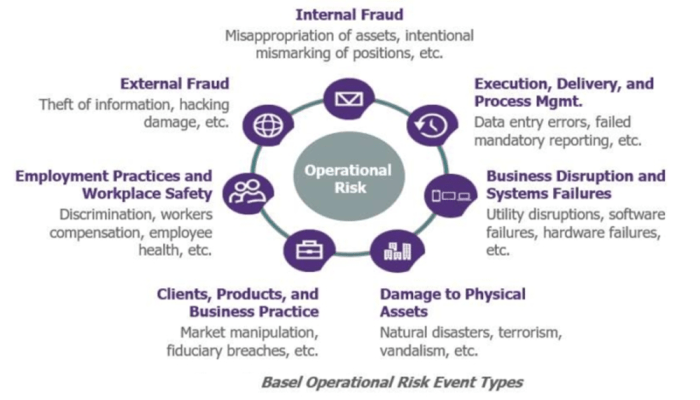
Welcome aboard the rollercoaster of Operational Risk Analysis, where we dive headfirst into the deep end of business hazards and surf those gnarly waves of uncertainty! Buckle up, because we’re not just analyzing risks; we’re turning those ticking time bombs into playful puppies with a sprinkle of strategy and a dash of humor.
From the fundamental framework to the art of risk assessment, we’ll explore how different industries juggle their unique risks like seasoned circus performers. Spoiler alert: it’s all about the culture of the organization! So, grab your magnifying glass and detective hat as we uncover how blending risk management into daily business operations can take productivity to new heights—while keeping those operational gremlins at bay.
Operational Risk Framework
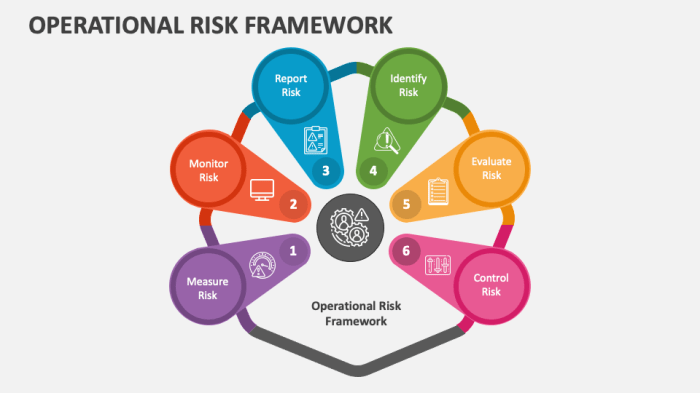
In the bustling world of business, the operational risk framework acts as a safety net, catching all the potential risks that might slip through the cracks. It’s like a superhero cape for organizations, ready to swoop in and save the day when unforeseen challenges arise. This framework is essential for identifying, assessing, and mitigating risks that can affect business operations, ensuring the organization remains afloat even when the seas get choppy.The operational risk framework consists of several essential components that work together harmoniously, like a well-oiled machine.
These components not only help businesses withstand turbulence but also ensure they thrive. Key elements include risk identification, risk assessment, control measures, and monitoring. In practical terms, they form the backbone of an organization’s approach to risk management.
Essential Components of an Operational Risk Framework
Understanding the various components of an operational risk framework is crucial for businesses aiming to safeguard their operations. Here are the main elements to consider:
- Risk Identification: This involves recognizing the potential risks that could disrupt operations, such as system failures, process inefficiencies, or external threats like cyberattacks. Picture a detective on a mission, hunting down all possible culprits lurking in the shadows.
- Risk Assessment: Once risks are identified, the next step is evaluating their potential impact and likelihood. This is like trying to figure out whether that spider on the wall is a harmless daddy longlegs or a venomous tarantula. Businesses need to prioritize which risks are worth losing sleep over.
- Control Measures: Implementing strategies to mitigate identified risks is key. This could range from adding extra security to enhancing employee training. Think of this step as putting on a life jacket before jumping into a shark-infested ocean – safety first!
- Monitoring and Reporting: Continuous monitoring ensures that risk controls remain effective and relevant. Regular reporting helps keep everyone in the loop, like a town crier announcing the latest news. This ongoing vigilance is necessary to adapt to the ever-changing risk landscape.
Variations Across Different Industries
The operational risk framework isn’t a one-size-fits-all cape; it varies significantly across different industries. Here’s how the framework morphs depending on the context:
- Financial Services: In this industry, operational risk frameworks tend to be meticulous, focusing heavily on regulatory compliance and fraud prevention. Think of it as a high-stakes poker game where one wrong move could cost millions.
- Manufacturing: The focus here is on process efficiency and safety measures. Operational risks may include equipment malfunction or supply chain disruptions, akin to a game of Jenga where one wrong block can bring the whole tower down.
- Healthcare: For healthcare providers, risks revolve around patient safety and data protection. It’s a delicate balance, reminiscent of walking a tightrope – one misstep can have dire consequences.
- Technology: In the tech sector, the framework often emphasizes cybersecurity risks and innovation management. Organizations must be agile and proactive, like a ninja dodging potential cyber threats at every turn.
Role of Organizational Culture in Risk Management Practices
Organizational culture plays a pivotal role in shaping how operational risk management practices are developed and implemented. A strong culture that prioritizes risk awareness and accountability can significantly enhance the effectiveness of the risk framework. Here’s how culture influences these practices:
- Risk Appetite: A risk-aware culture encourages open discussions about risk, fostering an environment where employees feel comfortable reporting potential issues. This is akin to a family dinner where everyone can voice their opinions without fear of being sent to their room.
- Training and Awareness: Organizations that prioritize employee training and awareness about risks tend to have more robust risk management practices. It’s like teaching kids the importance of looking both ways before crossing the street – safety skills are essential.
- Leadership Commitment: When leadership demonstrates a commitment to risk management, it sets the tone for the entire organization. This creates a ripple effect, encouraging all employees to take risk seriously, much like a captain steering a ship through stormy waters.
- Adaptability: A culture that embraces change and innovation can better respond to emerging risks. This adaptability is crucial in a fast-paced world, much like a chameleon changing colors to blend in with its environment.
Risk Assessment Techniques
In the whimsical world of operational risk management, risk assessment techniques are the charming knights that defend businesses from the dreaded dragons of uncertainty. These techniques allow companies to identify, analyze, and prioritize risks, ensuring that no surprise attacks catch them off guard. So, grab your risk assessment sword and let’s march into the realm of risk assessment techniques!To effectively assess operational risks, businesses can utilize a toolbox filled with various techniques that work like a charm—but without the glitter of a fairy godmother.
Some popular risk assessment techniques include qualitative assessments, quantitative assessments, and risk matrices. Each technique offers unique insights and benefits, allowing businesses to gain a comprehensive understanding of their risk landscape.
Conducting Risk Assessment in a Small Business Environment
Conducting a risk assessment in a small business setting is akin to cleaning out your attic; you need to dig through all those cobwebs and dust bunnies to see what treasures or troubles lie beneath. Here’s a straightforward approach to get started:
1. Identify Risks
Gather your team around like a council of wise wizards and brainstorm potential risks that could impact your operations. Think about everything from equipment failures to sudden employee departures.
2. Analyze Risks
Assign a likelihood and impact score to each identified risk. Use a scale of 1 to 5, where 1 represents a rare occurrence and 5 signifies a near certainty, while the impact scales from minor inconvenience to catastrophic disaster.
3. Prioritize Risks
Create a risk matrix to visualize which risks require immediate attention. The higher the score (likelihood multiplied by impact), the higher the risk’s priority.
4. Develop Mitigation Strategies
For each high-priority risk, devise strategies to mitigate or manage the risk. This might include training employees, investing in backup systems, or establishing emergency response plans.A practical example could be a small bakery assessing the risk of equipment failure, which could be assigned a likelihood score of 3 and an impact score of 4. This gives a total risk score of 12, prompting the bakery owner to consider investing in regular maintenance.
Utilizing Scenario Analysis in Operational Risk Evaluations
Scenario analysis is a powerful crystal ball for operational risk evaluations, providing a vivid imagination of how different scenarios might unfold. This technique allows businesses to envision various risk scenarios and their potential impacts, creating a theater of risk warfare where they can strategize like seasoned generals.To utilize scenario analysis effectively, follow these steps:
1. Define Scenarios
Craft plausible scenarios based on past incidents or potential future events. For instance, a sudden spike in demand during the holiday season could be a scenario for a small retailer.
2. Assess Impact
For each scenario, evaluate the potential impact on your operations, finances, and reputation. This is where you channel your inner dramatist to envision the consequences of each scenario.
3. Develop Action Plans
Based on the scenario assessments, create action plans that detail how to respond to each situation. This prepares your business to handle risks without missing a beat—like a pro juggler in a circus.
4. Review and Revise
Regularly revisit scenarios as time goes on; risks evolve, and so should your analysis. Keep your scenario theater fresh and relevant.By embracing scenario analysis, businesses can create a risk-savvy mindset, arming themselves with strategies that are as sharp as a knight’s sword, ready to slice through uncertainty and defend their operational kingdom.
Integrating Risk Management into Business Processes
In the bustling world of business, risk management is not just a yawn-inducing buzzword; it’s like the secret sauce that can elevate a bland dish to gourmet status! By embedding risk management into everyday operations, organizations can not only safeguard their assets but also enhance productivity and efficiency. Let’s dive into some strategies that can spice up your business processes with a dash of risk awareness.
Embedding Risk Management in Daily Operations
To successfully integrate risk management into daily business processes, organizations need a strategic approach that aligns risk management with their core activities. This involves making risk management an integral part of decision-making, rather than a separate, hard-to-swallow pill.
- Regular Training Sessions: Employees should undergo regular training that emphasizes the importance of risk management. Think of it as the corporate equivalent of a yoga class – stretching those risk muscles to ensure flexibility and resilience in the face of potential threats.
- Risk Awareness Culture: Foster a culture where everyone feels responsible for identifying risks. Encourage employees to report potential issues without fear of backlash. After all, no one wants to be the guy who ignored the smoke alarm!
- Integration with Technology: Utilize technology to monitor risks in real-time. Implementing risk management software can streamline processes and provide instant feedback, much like a personal trainer yelling motivational quotes at you during a workout.
- Clear Communication Channels: Establish clear lines of communication among teams regarding risk factors. In a restaurant, it’s crucial that the chef knows if the supplier has had a bad batch of ingredients. Imagine the chaos of a surprise ingredient swap at a dinner rush!
Integrating these strategies isn’t just a checkbox exercise; it’s about creating a seamless flow where risk management becomes as natural as breathing (or ordering a coffee).
Enhancing Business Productivity through Effective Risk Management
Productivity thrives in an environment where risks are managed effectively. By proactively addressing risks, businesses can minimize disruptions and maximize operational efficiency. Here’s a detailed plan to turn potential pitfalls into stepping stones.
- Identify Critical Processes: Focus on identifying core business operations that are most susceptible to risk. For instance, a restaurant’s supply chain logistics can often be a hotbed of risk. By pinpointing these areas, businesses can develop targeted strategies to mitigate potential disruptions.
- Implement Risk Assessments: Regularly perform risk assessments to evaluate vulnerabilities. Think of it as giving your business a health check-up – identifying issues before they become chronic problems.
- Develop Contingency Plans: For each identified risk, create a detailed contingency plan. This is akin to having an umbrella in your car – you might not need it often, but when it rains, you’ll be glad you have it!
- Monitor and Adapt: Continuously monitor risks and adapt strategies as necessary. The business world is ever-changing, much like fashion trends – what’s in today may be out tomorrow, and you need to keep up!
When risk management becomes a part of the daily grind, productivity will likely soar, and you’ll be laughing all the way to the bank.
Operational Risk Management in the Restaurant Industry
The restaurant industry is a thrilling rollercoaster of unpredictability, with operational risks lurking around every corner. However, with the right operational risk management practices, restaurant owners can serve up success.
- Supplier Reliability Checks: Regularly assess the reliability of suppliers to ensure consistent ingredient quality. Imagine the horror of biting into a rubbery tomato – that’s a risk to be managed!
- Employee Training on Safety Protocols: Safety is paramount in restaurants. Train staff on food handling and safety protocols to minimize accidents. Think of this as arming your team with shields against the dragons of foodborne illness.
- Emergency Response Plans: Develop and rehearse emergency response plans for various scenarios, like fire or power outage. A restaurant without a backup power source during a dinner rush is like a chef without a spatula – a recipe for disaster!
- Customer Feedback Mechanism: Implement a robust mechanism for gathering customer feedback. This helps identify potential risks related to customer satisfaction and allows for timely adjustments. Remember, a happy customer is the best risk management strategy!
By adopting these operational risk management practices, restaurants can create a resilient environment that thrives even in the face of challenges. With risk management as part of the recipe, the dish is sure to be a hit!
End of Discussion
As we wrap up this thrilling escapade through the land of operational risk analysis, remember that effective risk management is not just a necessary evil, but a golden opportunity to boost your business productivity and resilience. So, whether you run a taco truck or a tech startup, wield that risk management wizardry and turn potential pitfalls into stepping stones. Until next time, keep your eyes peeled for risks lurking in the shadows—who knows when they’ll strike!
Quick FAQs
What is operational risk analysis?
It’s the process of identifying, assessing, and managing risks that arise from day-to-day business operations, ensuring your company doesn’t trip over its own shoelaces!
How can small businesses conduct a risk assessment?
Small businesses can begin by identifying potential risks, evaluating their impact, and creating a risk management plan that fits like a well-tailored suit.
Why is organizational culture important in risk management?
Because a strong culture fosters awareness and proactive behavior towards risk, making it easier to spot trouble before it becomes a full-blown crisis!
What are some common risk assessment techniques?
Common techniques include scenario analysis, brainstorming sessions, and SWOT analysis—basically, a fancy way of saying “What could possibly go wrong?”
How can restaurants implement operational risk management?
Restaurants can adopt practices like staff training, regular safety audits, and customer feedback loops to stay ahead of the game and keep the kitchen chaos at a minimum!


